
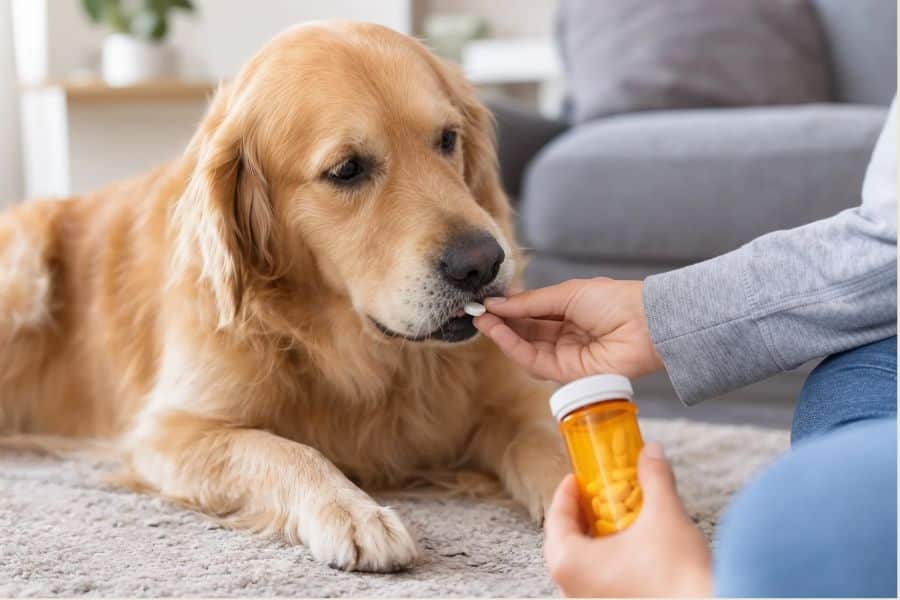
Apoquel can ease the scratch–lick–chew cycle, but it does not cure allergies. This prescription medicine reduces itching linked to allergic skin disease. Owners should understand its dose, expected response, side effects, and safety limits. A complete plan checks for parasites or infection.
What Is Apoquel and What Does It Treat?
Apoquel is the brand name for oclacitinib, an oral medicine that changes the activity of immune signals involved in itching and inflammation. It is a Janus kinase (JAK) inhibitor, not a steroid or traditional antihistamine.
The US label approves it to control itching associated with allergic dermatitis and atopic dermatitis in dogs at least 12 months old. It may be considered for persistent discomfort linked to environmental or flea allergies. It does not remove triggers such as fleas, food sensitivities, pollen, or dust mites.
Apoquel Dosage for Dogs: How the Schedule Works
The labeled dose is 0.4–0.6 mg of oclacitinib per kilogram (0.18–0.27 mg per pound), based on body weight. The usual schedule is twice daily for up to 14 days, followed by once-daily maintenance when continued treatment is appropriate. Tablets are available in 3.6 mg, 5.4 mg, and 16 mg strengths.
Why Does the Dose Change After Two Weeks?
The initial twice-daily phase helps control an active flare. Once-daily dosing is the labeled maintenance schedule after that period. Do not extend twice-daily use, reduce the amount, or stop treatment independently.
Can Apoquel Be Given With Food?
Yes. Tablets may be given with or without food. Follow the label and ask the clinic about digestive upset.
Use tablets only as directed.
How Fast Does Apoquel Work?
Some dogs improve within hours; many show itch control within a day. Redness, damaged skin, and infection may take longer to resolve. Track scratching, paw licking, and skin changes.
Apoquel controls symptoms; it does not identify the cause. Ongoing itching may signal infection or a need to adjust the plan.
Apoquel Side Effects in Dogs: What to Watch
Many dogs tolerate Apoquel, but side effects can occur. Report new or persistent symptoms to the clinic.
Commonly Reported Side Effects
Reported reactions include:
- Vomiting or diarrhea
- Reduced appetite
- Low energy or lethargy
- New skin or under-skin lumps
Repeated vomiting, diarrhea, refusal to eat, or marked tiredness needs prompt advice.
Less Common but Important Safety Concerns
Apoquel modifies immune activity and may increase susceptibility to infections, including demodectic mange. It may worsen certain existing cancers or abnormal growth conditions. New benign and malignant growths have been reported during studies and after approval. Report new lumps, sores, discharge, or persistent ear trouble.
The medicine is not for dogs under 12 months or dogs with serious infections. Use extra caution with recurring infections or cancer history. It is not intended for breeding, pregnant, or nursing dogs. Tell the prescriber about all medicines; combinations with other immune suppressants have not been adequately evaluated.
Does a Dog Need Blood Tests on Apoquel?
Monitoring depends on health history and treatment duration. Bloodwork or regular examinations may be recommended, especially with long-term use.
Share past infections, lumps, and appetite or energy changes. Keep a simple weekly log of itch intensity, affected body areas, stool quality, appetite, and energy. Photos of recurring rashes can help compare changes between visits and show whether improvement is lasting. Bring the log to follow-ups to guide treatment adjustments.
What If You Miss a Dose or Give Too Much?
For a missed dose, contact the prescribing clinic. Do not double the next dose. For an overdose, call a veterinarian or animal poison service promptly. Store tablets securely.
Is Apoquel Right for Every Itchy Dog?
No. Itching can also result from fleas, mites, bacterial or yeast infections, contact irritation, or food reactions. An examination and targeted tests may be needed. Care may combine parasite control, infection treatment, diet trials, or other therapies.
Pet diagnostic care can investigate signs that need further evaluation, while pet disease management supports an individualized treatment plan and follow-up.
Help Your Dog Find Lasting Itch Relief
Apoquel may improve comfort when appropriately prescribed and monitored. It should accompany care that addresses triggers and checks for infection. If your dog scratches constantly, licks its paws, or has recurring skin problems, book an appointment to discuss treatment options and whether Apoquel is suitable. Bring medication details and an itch record.
Frequently Asked Questions(FAQs):
1. Is Apoquel a steroid?
A: No. Apoquel contains oclacitinib, a Janus kinase inhibitor that affects itch and inflammatory signaling. It is not a corticosteroid or antihistamine, but remains a prescription medicine with important precautions and supervision.
2. How long can a dog safely take Apoquel?
A: Some dogs receive once-daily maintenance treatment for extended periods. Review itch control, infection risk, health history, and new symptoms regularly with periodic examinations and any recommended tests based on risk.
3. Can I give my dog Apoquel twice a day?
A: The labeled schedule allows twice-daily dosing for up to 14 days, followed by once-daily maintenance. Do not continue the initial schedule longer unless the prescribing veterinarian specifically directs you. Follow the exact label instructions for your pet carefully.
4. Does Apoquel cause cancer in dogs?
A: New benign and malignant growths have been reported in treated dogs. This does not mean every dog develops cancer; discuss cancer history and changing lumps. Your veterinarian can help weigh individual risks before treatment begins.
5. Can puppies take Apoquel?
A: Apoquel is not labeled for dogs younger than 12 months. A puppy needs an examination to identify the cause and choose age-appropriate care. Do not use it as a home treatment for young puppies.
6. What should I do if my dog has side effects?
A: Contact the prescribing clinic if vomiting, diarrhea, appetite loss, lethargy, lumps, or infection signs develop. Seek help for severe symptoms; do not change the dose independently. Keep a note of when symptoms started and each dose given.



Ready to see us?
We proudly bring lifelong wellness to the pets of Skaneateles, Marcellus, Tully, Lafayette, and beyond. Easily request an appointment for your pet using our online system!