
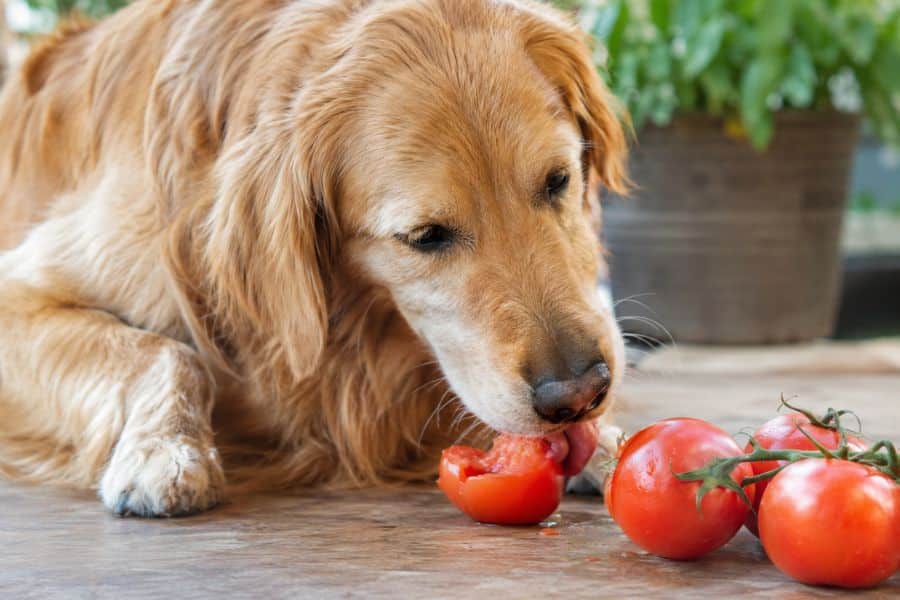
A red ingredient on a dog food label can raise a simple question: are tomatoes good for dogs? Ripe tomatoes can be safe in appropriate amounts, and tomato ingredients can provide moisture, fiber, and useful plant nutrients. Green tomatoes, stems, and leaves are different because they contain higher levels of potentially harmful compounds.
This guide covers tomato safety, nutrition, treats, labels, warning signs, and common questions. That distinction helps owners avoid unnecessary restrictions while keeping everyday feeding choices practical, safe, and nutritionally focused for dogs.
Are Tomatoes Safe for Dogs?
Ripe, red tomato flesh is generally non-toxic to dogs when offered in moderation. ASPCA identifies ripe tomato fruit as non-toxic while noting that tomato plants and unripe fruit contain potentially toxic compounds.
The concern involves tomatine and related compounds found in higher amounts in green parts of the plant. Large amounts of unripe tomatoes, stems, or leaves can cause stomach upset, weakness, and other concerning signs.
A small piece of ripe tomato is not the same as a dog eating a tomato plant. Maturity, quantity, and the dog’s individual tolerance matter.
What Do Tomatoes Add to Dog Food?
Tomatoes are not essential to a dog’s diet. They can support a complete recipe by supplying water, modest fiber, and nutrients such as vitamin C and vitamin A precursors. They contain lycopene and other plant compounds.
The value depends on the complete formula. One ingredient cannot determine whether a dog food is nutritious. FDA guidance states that pet food ingredients must be safe and have an appropriate function. Ingredients are listed by weight, so tomato near the end of a list generally contributes less than ingredients listed above it.
Is Tomato in Dog Food the Same as Fresh Tomato?
No. Labels may list tomato, tomato paste, tomato powder, or tomato pomace. Processing changes moisture, texture, and concentration.
Tomato pomace can contain skins, pulp, and seeds left after processing. Manufacturers may use it as a fiber source or for formulation purposes. Its presence does not automatically make a food unhealthy.
Tomato paste is more concentrated than fresh tomato because water has been reduced.
Can Dogs Eat Tomatoes as a Treat?
Many healthy dogs can eat small amounts of ripe, plain tomato occasionally. Remove stems and leaves, wash the fruit, and cut it into bite-sized pieces.
Avoid sauces and seasoned tomato dishes, especially products containing onion or garlic. Those ingredients create separate risks for dogs.
Introduce new foods gradually. Watch for vomiting, diarrhea, reduced appetite, or unusual behavior.
Are Green Tomatoes Safe for Dogs?
Green, unripe tomatoes need more caution. They contain higher levels of tomatine than ripe fruit. Leaves and stems present an added concern.
Do not intentionally offer green tomatoes as treats. If a dog eats a large amount, or consumes plant material, contact a professional for guidance. Possible signs include drooling, gastrointestinal upset, weakness, or changes in normal behavior.
How to Choose Dog Food With Tomatoes
Read the full ingredient panel instead of focusing on tomato. Look for a nutritional adequacy statement showing that the product is complete and balanced for the intended life stage. FDA explains that this statement indicates the food is intended to meet established nutrient requirements when fed as the sole diet.
Consider your dog’s age, size, activity level, body condition, and individual dietary needs.
Tomatoes should not be treated as proof of food quality. A tomato-containing recipe can be appropriate or unsuitable depending on the full formulation.
If your dog has digestive problems, food reactions, or a condition requiring dietary management, discuss food choices with a qualified professional. Good veterinary care includes practical guidance on nutrition and feeding decisions.
When Should You Contact a Professional?
Seek professional advice if your dog eats tomato leaves, stems, a large amount of green tomato, or develops concerning symptoms. The amount consumed and the dog’s size can affect the level of concern.
Do not induce vomiting or give home remedies unless a professional tells you to do so.
The Bottom Line
Tomatoes can be a reasonable ingredient in dog food when used appropriately. Ripe tomato fruit is generally safe in moderation. Green tomatoes, stems, and leaves deserve more caution because they contain higher levels of potentially harmful compounds.
The useful question is not “Are tomatoes good or bad for dogs?” Ask whether the complete diet provides appropriate nutrition for your dog. Judge the whole formula, keep extras sensible, and take unusual symptoms seriously.
Frequently Asked Questions(FAQs):
1. Can dogs eat tomatoes every day?
A: Healthy dogs can usually tolerate small amounts of ripe tomato, but daily tomato is unnecessary. A complete, balanced dog food provides essential nutrients. Frequent extras may add calories or cause digestive upset without meaningful nutritional benefit.
2. Is tomato paste safe in dog food?
A: Tomato paste in commercial dog food can be acceptable when the finished recipe is properly formulated. Plain tomato paste differs from sauces containing onion, garlic, excess salt, or seasonings that dogs should avoid.
3. Can tomatoes cause diarrhea in dogs?
A: Tomatoes may contribute to diarrhea in some dogs, particularly after a sudden dietary change or larger serving. Persistent, severe, bloody, or repeated diarrhea warrants professional evaluation.
4. Are tomatoes good for dogs with sensitive stomachs?
A: Not necessarily. Ripe tomato is safe for many dogs, yet individual tolerance varies. Dogs with sensitive digestion may react to unfamiliar ingredients. Introduce new foods cautiously and follow an appropriate feeding plan.
5. What happens if a dog eats green tomatoes?
A: Green tomatoes contain more tomatine than ripe fruit. A substantial ingestion may cause gastrointestinal upset, weakness, drooling, or other abnormal signs. Contact a professional, especially when stems or leaves were eaten too.
6. Should I avoid dog food containing tomatoes?
A: No. Tomato on a dog food label is not automatically a reason to reject a recipe. Focus on nutritional adequacy, formulation, ingredient quality, and your dog’s needs.




Ready to see us?
We proudly bring lifelong wellness to the pets of Skaneateles, Marcellus, Tully, Lafayette, and beyond. Easily request an appointment for your pet using our online system!