
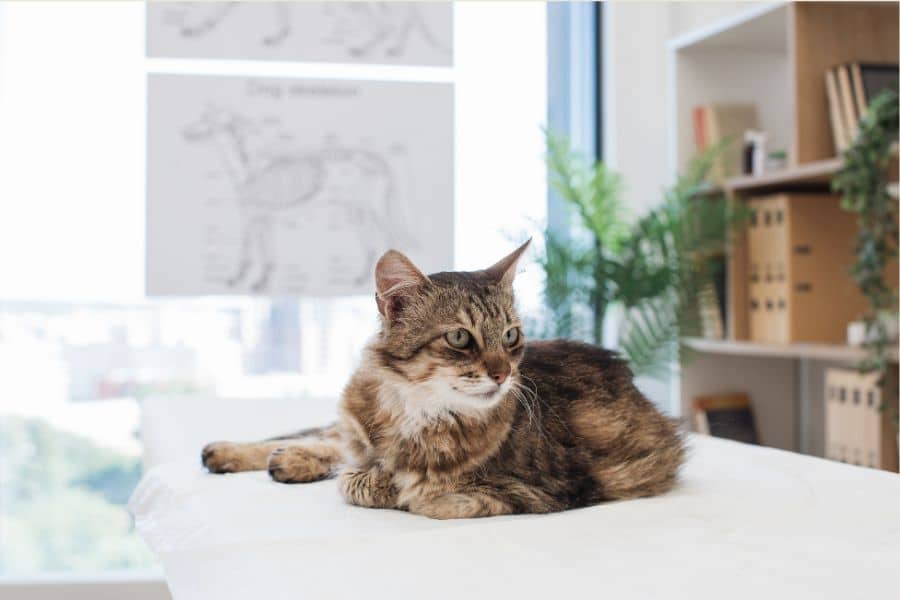
Cats can develop loose stools after food changes, stress, parasites, infections, medication, or illness. Mild diarrhea in a bright adult cat may settle with careful home support, while watery stools, blood, vomiting, poor appetite, dehydration, or weakness need prompt veterinary attention.
Cat Diarrhea: Start by Looking at the Whole Picture
Diarrhea is not a diagnosis. It is a symptom. A diet change, treats, food intolerance, parasites, infection, stress, toxins, or underlying disease can be involved.
Track stool frequency, texture, color, appetite, water intake, energy, and vomiting. A fresh stool sample can help a veterinarian investigate. Persistent diarrhea may need investigation because the trigger may require treatment.
When Mild Diarrhea May Be Watched
A single episode of soft stool in a healthy adult cat that is eating, drinking, and behaving normally may be monitored closely. Keep fresh water available and avoid new treats, supplements, or foods while you monitor the litter box closely.
If stools remain loose, become watery or frequent, or your cat develops another symptom, contact a veterinarian.
Natural Cat Diarrhea Remedies: What May Help
Hydration Comes First
Diarrhea increases fluid loss. Provide clean water in accessible places. Wet food can also contribute water. Do not force water into a cat’s mouth. Weakness, poor appetite, dry gums, or sunken eyes can indicate dehydration and need professional assessment.
Keep Food Simple and Consistent
Do not make several diet changes at once. A sudden switch can worsen digestive upset and make it difficult to identify the trigger. Ask your veterinarian whether a highly digestible gastrointestinal diet or another suitable food is appropriate.
Do not routinely fast a cat without professional guidance. Appetite matters as much as stool consistency.
Pumpkin and Fiber: Not a Universal Fix
Canned pumpkin or a cat-appropriate fiber supplement may help some forms of diarrhea, especially when stool frequency and fiber responsiveness are involved. Suitability depends on the cat, and too much fiber can worsen digestive trouble. Ask your veterinarian before adding it.
Probiotics for Cats
Cat-specific probiotics may support healthy intestinal bacteria after digestive disruption. Probiotics are not a cure for parasites, toxins, obstruction, or serious disease. Choose a feline product rather than a human or other-animal supplement.
Vet-Recommended Cat Diarrhea Treatment
When diarrhea does not resolve, keeps returning, or appears alongside other symptoms, a veterinarian may investigate the cause instead of simply suppressing the stool.
Testing Can Find the Trigger
A fecal examination may identify parasites or other infectious causes. Blood tests can assess dehydration and look for problems outside the digestive tract. Imaging may be considered when obstruction, inflammatory disease, or another structural problem is suspected.
Treatment Depends on the Diagnosis
Treatment can include a prescription gastrointestinal diet, parasite control, fluids, probiotics, or medication selected for the specific cause. Dehydrated cats may need fluids. Infection, inflammation, toxin exposure, or chronic disease requires cause-specific care.
There is no single “best medicine” for cat diarrhea. Treating the symptom without finding the reason can delay appropriate care.
What Not to Give a Cat With Diarrhea
Human anti-diarrheal medicines are not a safe shortcut. Pepto-Bismol and salicylate-containing products can be dangerous for cats. Do not give Imodium, leftover antibiotics, dewormers, or another pet’s medication without veterinary advice.
Avoid rapidly combining pumpkin, fiber, probiotics, a new food, and other remedies. If the stool changes, you will not know which product helped or caused a problem.
When Cat Diarrhea Needs Veterinary Attention
Seek prompt care for bloody stool, black or tarry stool, repeated vomiting, severe or frequent watery diarrhea, marked lethargy, pain, weakness, dehydration, or refusal to eat. Kittens, senior cats, pregnant cats, and cats with chronic illness can become vulnerable faster.
If diarrhea continues beyond a day or two, or keeps coming back, arrange an examination. If your cat may have swallowed a toxin, medication, string, or foreign object, seek help promptly.
If you are unsure whether your cat’s symptoms can be managed at home, contact a veterinarian near you for guidance based on your cat’s age, history, and current signs.
Natural vs. Vet-Recommended: Which Is Better?
Natural support may suit a mild episode in a healthy adult cat. Its role is supportive care, not diagnosis. Vet-recommended treatment matters when diarrhea is persistent, severe, recurrent, or linked with other symptoms.
The safest approach is not treating “natural” and “medical” as opposing choices. Use low-risk support when appropriate, monitor closely, and involve a veterinarian when warning signs appear.
Frequently Asked Questions(FAQs):
1. What can I give my cat for diarrhea at home?
A: For mild diarrhea in an otherwise healthy adult cat, provide fresh water, keep food consistent, and ask about a suitable highly digestible diet. Cat-specific probiotics or fiber may help some cases, but monitor closely.
2. Is pumpkin safe for cats with diarrhea?
A: Plain canned pumpkin may help some cats because of its fiber content. It is not appropriate for every cause of diarrhea, and large amounts can worsen digestive upset. Ask your veterinarian about suitability and quantity.
3. How long can diarrhea last in cats?
A: A mild episode may resolve quickly, but diarrhea lasting beyond a day or two deserves veterinary advice, especially if it worsens. Recurrent diarrhea can signal parasites, food intolerance, inflammation, infection, or another health problem.
4. Can I give my cat Pepto-Bismol for diarrhea?
A: No. Do not give Pepto-Bismol unless a veterinarian specifically instructs you. Some human diarrhea medicines contain ingredients that can be harmful to cats. Ask for a feline-safe treatment instead of using medicine from your cabinet.
5. Should I stop feeding my cat during diarrhea?
A: Do not routinely withhold food without professional advice. Cats can develop serious problems when they stop eating. Keep your veterinarian informed if appetite decreases, particularly when diarrhea occurs with vomiting, weakness, or other concerning changes.
6. When should I take my cat to the vet for diarrhea?
A: Contact a veterinarian promptly if diarrhea is bloody, black, very watery, frequent, or accompanied by vomiting, pain, weakness, dehydration, or poor appetite. Kittens, older cats, and cats with chronic disease need extra caution.

Ready to see us?
We proudly bring lifelong wellness to the pets of Skaneateles, Marcellus, Tully, Lafayette, and beyond. Easily request an appointment for your pet using our online system!