
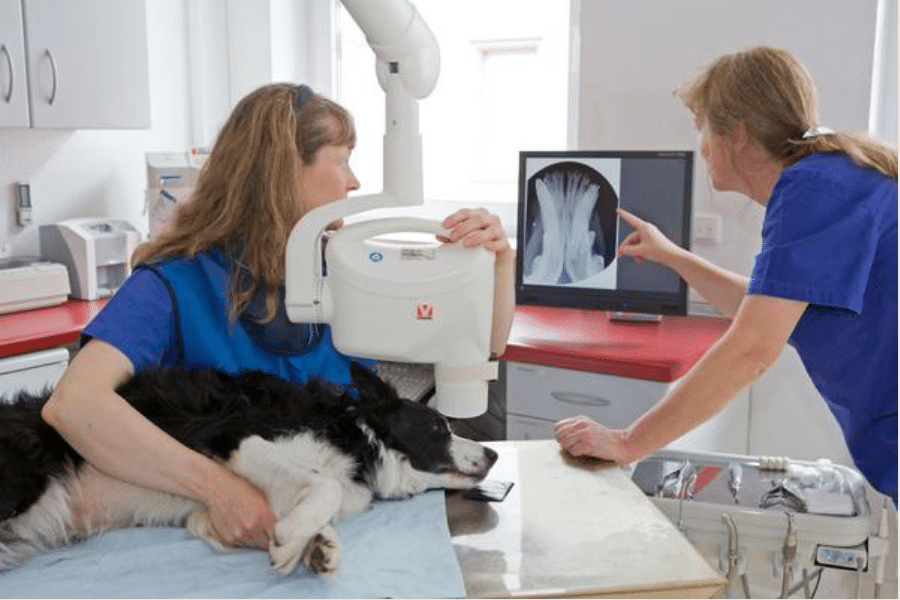
A pet can have serious dental disease while the teeth look surprisingly normal. A visual exam can identify tartar, gum redness, broken crowns, swelling, and other surface changes. Dental X-rays reveal tooth roots, bone loss, hidden infection, retained roots, resorption, and damage beneath the gumline.
These images explain why a complete dental assessment often includes both a hands-on examination and radiographs, especially when pain, bad breath, chewing changes, or advanced disease is suspected.
Why Looking at the Teeth Is Not Enough
A visual oral exam shows visible enamel, gums, and areas that can be inspected directly. It cannot provide a clear view of every tooth root or the bone surrounding each tooth.
Dental disease often develops below the gumline. A tooth may have an intact crown while the root is infected, fractured, or being destroyed. Gum tissue can hide changes affecting supporting bone. A pet may continue eating despite discomfort, making the problem difficult to recognize at home.
What Pet Dental X-Rays Can Reveal
1. Hidden Tooth Root Infections
An infected tooth root may produce no obvious surface clue. A dental radiograph can reveal changes around the root that suggest infection or an abscess. This information helps determine whether a tooth can be preserved or needs treatment.
2. Bone Loss From Periodontal Disease
Periodontal disease does more than irritate the gums. As inflammation progresses, the bone supporting the teeth can deteriorate. Dental X-rays can show the amount and location of bone loss, giving a more complete picture of disease severity.
3. Tooth Resorption
Tooth resorption occurs when parts of a tooth are gradually destroyed. Cats are particularly prone to this painful condition. Some affected areas develop below the gumline and remain invisible during a routine visual check. Radiographs can expose these changes and help identify painful teeth.
4. Retained Tooth Roots
A tooth can appear to be gone while part of its root remains inside the jaw. Retained roots may cause inflammation, infection, or ongoing discomfort. X-rays help locate these fragments before they become a hidden source of trouble.
Why X-Rays Matter During a Dental Cleaning
A professional dental procedure can include a full-mouth assessment, dental X-rays, periodontal charting, scaling, polishing, and extractions when diseased teeth cannot be saved. Imaging provides information that cleaning alone cannot.
The images can change the treatment plan. A tooth that looks acceptable from above may have severe root damage. Another tooth may have bigger changes that affect extraction planning. Radiographs support a transparent assessment rather than relying on appearance alone.
For pet owners researching pet dental care, this distinction explains why dental X-rays are more than an optional picture. They help identify problems that would otherwise remain hidden.
What Happens During Pet Dental X-Rays?
Dental X-rays require the mouth to remain still and images to be positioned accurately. Pets typically need anesthesia or sedation for a thorough dental procedure. This allows safe examination, imaging, and cleaning below the gumline.
The number and type of images depend on the pet’s mouth, symptoms, and findings. Full-mouth imaging may be recommended for a comprehensive assessment. Digital systems produce detailed images of individual teeth and surrounding structures.
When Should Your Pet Have Dental X-Rays?
X-rays may be especially valuable when a pet has persistent bad breath, red or bleeding gums, facial swelling, difficulty chewing, dropped food, excessive drooling, weight loss, a broken tooth, or sensitivity around the mouth. They can be useful during routine dental procedures because visible disease does not reliably indicate what is happening beneath the gums.
How Dental X-Rays Improve Treatment Decisions
X-rays can answer practical questions: Is the root healthy? Has supporting bone been lost? Is a tooth fractured below the gum? Is a missing tooth actually retained? Is extraction necessary? These answers reduce guesswork and support evidence-based treatment and planning.
A Clearer View of Your Pet’s Oral Health
A clean-looking smile does not always mean a healthy mouth. Dental X-rays can uncover root infections, bone loss, fractures, resorption, retained roots, and other hidden problems a visual exam cannot fully evaluate. That information supports informed treatment decisions and can help address painful disease earlier.
If your pet has bad breath, chewing changes, mouth sensitivity, or a history of dental problems, ask whether dental imaging is appropriate. To understand your pet’s oral health and discuss available care, book an appointment and request a dental evaluation today.
Frequently Asked Questions(FAQs):
1. Can a pet have dental disease with normal-looking teeth?
A: Yes. Disease can develop around tooth roots, beneath gums, or inside supporting bone while the visible crown appears normal. Dental X-rays can identify hidden changes that a visual examination cannot confirm.
2. Are dental X-rays necessary for dogs and cats?
A: They are often recommended during comprehensive dental procedures because important disease may exist below the gumline. The need depends on the pet’s oral findings, health history, age, symptoms, and the clinician’s assessment.
3. What do dental X-rays show in cats?
A: They can reveal tooth resorption, root disease, bone loss, retained roots, fractures, and other changes hidden beneath the gums. Cats can develop painful dental conditions that are difficult to identify through appearance alone.
4. Can X-rays find an abscess in a pet’s tooth?
A: Dental radiographs can reveal changes around a tooth root that may indicate infection or an abscess. They provide useful information when surface examination does not explain swelling, pain, odor, or other concerning signs.
5. Do pets need anesthesia for dental X-rays?
A: A thorough dental procedure generally requires anesthesia or appropriate sedation because accurate positioning and a complete oral assessment require the pet to remain still. Anesthesia can permit safer cleaning, imaging, and treatment.
6. How often should pets get dental X-rays?
A: There is no single schedule for every pet. Recommendations depend on age, dental history, symptoms, examination findings, and risk factors. Ask your pet’s care team when imaging should be included in future dental evaluations.

Ready to see us?
We proudly bring lifelong wellness to the pets of Skaneateles, Marcellus, Tully, Lafayette, and beyond. Easily request an appointment for your pet using our online system!